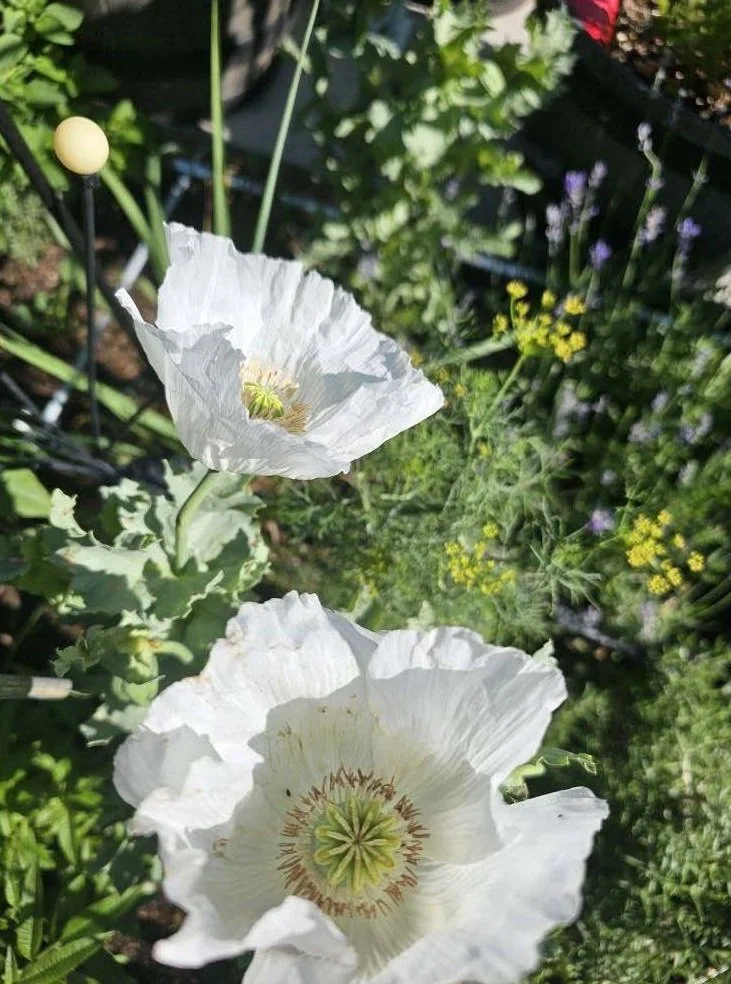
White Sissinghurst Poppy
(Papaver somniferum 'Sissinghurst White')
Care instructions/Growing:
Light:
Full Sun (Requires bright, direct light for strong stems and optimal blooming)
USDA Hardiness Zones: Annual Grown as a hardy annual in zones 2–11
Lifecycle:
Self Seeding Annual
When to sow:
They benefit greatly from a natural period of cold stratification (freezing and thawing) in the soil beforehand.
Sow in late fall (late October/November) or very early spring (late February/March) when the ground can still be worked. In Colorado, you can even sprinkle them right onto the top of melting snow.
Sowing:
The seeds are incredibly fine. Mix them with a bit of fine-grain sand to ensure even distribution, and simply scatter them onto the soil surface. Gently press down with a dry hand so they make contact with the soil, but do not cover them with dirt. Poppies completely dislike root disturbance due to their long, delicate taproots. Direct sowing is highly recommended either in the late autumn or very early spring as soon as the soil can be worked. If you must start them indoors, use biodegradable paper pots or soil blocks 4 to 6 weeks before your last frost and transplant with extreme care.
Plant Spacing:
10 to 12 inches apart (Thin seedlings early before they reach 6 inches tall to allow the remaining plants to develop robust taproots)
Watering:
Keep the seedbed consistently moist but never soggy until germination. Once established, these plants possess excellent moderate drought tolerance. Water sparingly (about 1 inch per week); overwatering will cause them to grow too tall, leggy, and prone to flopping.
Soil Preference: They thrive in poor to average, well-drained soil. Rich soils or heavy fertilizers will generate excessive foliage at the expense of those stunning, pure white, cup-shaped blooms.
Germination and Care:
They benefit greatly from a natural period of cold stratification (freezing and thawing) in the soil beforehand.
Keep moist. Ensure the topsoil stays consistently moist until the seedlings emerge (usually 14 to 21 days). In Colorado's dry spring, this may mean misting the area frequently if you don't get natural precipitation.
Days to Maturity: 80 to 90 days
Plant Height: 2 to 3 feet (60 to 90 cm)
Plant Width: 10 to 12 inches (25 to 30 cm)
Key Care & Growing Notes
The Afterlife of the Bloom: The iconic pleated white petals are fleeting, usually lasting only a few days. However, they are followed by gorgeous, structural, silvery-blue seed pods. If you want them to self-sow and return next year, leave the pods to dry on the stalk until they shake like rattles. If you want to control their spread, deadhead the spent blooms immediately.
Thinning:
When seedlings are about 2 to 3 inches tall, thin them out so the strongest plants are spaced about 12 inches apart. If you leave them crowded, they will compete for nutrients and produce fewer blooms. Do this with care as they do not like to be transplanted best to do this when they are young before the taproot gets long.
Watering:
Once established, they are surprisingly drought-tolerant but will produce larger flowers with occasional water during dry spells.
Harvesting and Self-Seeding Care:
These are annuals, meaning they will complete their life cycle in one season. They will bloom in early to mid-summer.
Future growth:
If you leave a few of the decorative green seed heads on the stalk after the petals drop, the pods will dry, and the plant will generously self-seed for next year.
1. Mythological Lore & History
Historically, Papaver somniferum is inextricably linked to the deities of sleep, dreams, and the underworld.
The Realm of Sleep:
In Greek mythology, the poppy was the primary symbol of Hypnos (the god of sleep), Thanatos (the god of peaceful death), and Morpheus (the god of dreams). It was believed that Hypnos brought sleep to humanity by touching them with a poppy branch or pouring a distillation of the flower over their eyes.
The Mother of Harvests:
The flower was equally sacred to Demeter (Ceres), the goddess of agriculture. Lore tells us that Demeter created the poppy to help herself sleep and find solace after the loss of her daughter, Persephone, to the underworld. Ancient wheat fields were naturally dotted with wild poppies, making them a symbol of fertility, the cyclical nature of life, and the inevitable harvest.
The White Variety:
The 'Sissinghurst White' variety specifically honors the historic Sissinghurst Castle Garden in England. In a metaphysical context, white blooms represent the highest octave of a plant’s vibration—shifting the poppy’s energy away from heavy sleep and deeply into the realms of lucid dreaming, spiritual clarity, and peaceful transition.
2. Metaphysical Properties
The energetic signature of the white poppy is cool, calming, and deeply receptive. It behaves as a gentle bridge between everyday waking reality and the deeper mysteries of the spirit.
Element:
Water
Celestial Governance:
The Moon (governing intuition, dreams, and the subconscious)
Energetic Vibrations: Peace, Dream Magic, Divination, Invisibility (energetic camouflaging), and Comforting Grief.
The Energy of the Void: White poppies hold the energy of a "sacred pause." They are exceptional tools for clearing mental noise and creating a quiet, liminal space for meditation or ritual work.
3. Metaphysical & Ritual Uses
Because of the plant's natural properties, physical ingestion should be treated with deep caution and respect. However, the energetic and symbolic uses of the dried flower, seeds, and pods are incredibly potent for practice.
Dreamwork & Astral Exploration
The white poppy is one of the premier allies for working with the subconscious mind.
Dream Pillows: Place dried white poppy petals or a small handful of the seeds inside a sachet beneath your pillow to induce vivid, prophetic dreams, assist with lucid dreaming, or combat restless, anxiety-driven insomnia.
Astral Guidance: Use the visual image of the stark white blossom during pre-sleep meditation to act as a beacon of light when traversing deep spiritual realms or seeking ancestral guidance in dreams.
Grief Support & Comfort
Honoring Demeter’s myth, the white poppy is a compassionate ally for those navigating profound loss or major life transitions.
Ancestral Altars:
Place the structural, crown-like dried seed pods on altars dedicated to loved ones who have passed. It honors their transition into a peaceful rest and keeps the line of spiritual communication clear and tranquil.
Releasing Rituals:
Write down a heavy burden, a lingering grief, or an attachment on a piece of paper. Place a few white poppy seeds inside the paper, fold it away from you, and bury it in the earth to allow the plant's energy to neutralize and quiet the pain.
Abundance & Manifestation (The Power of the Seed)
A single poppy pod holds thousands of tiny seeds, making it an ancient symbol of sudden, multiplying abundance.
Prosperity Satchels:
Carry a tiny vial or sachet of the seeds in your purse or keep them on a wealth altar to symbolize ideas, wealth, or projects multiplying effortlessly.
Setting Intentions: Because they are open-pollinated and true to their nature, sowing these seeds with a specific intention whispered into the soil allows your goals to grow organically with the seasons.